What comes back when a desk's machine is lost
In a Uremot Cloud lab test, we cut power to a running desk. Its saved files came back on another machine. One newer file was missing, and the desk showed exactly where its copy stopped.
At 22:06 UTC on 22 November, we cut power to machine A while a Uremot Cloud desk was running. Its latest saved copy held the disk as it was five minutes earlier. In the minute before the cut, we had written one more file. If your desk went dark halfway through work, which files would you find when you opened it again?
We set up two desks in the lab to find out. The running desk had one file from before its 22:01 save and one written at 22:05. The other desk had already stopped and saved its disk. Machine B had neither disk on it.
Ten minutes in, Uremot refused to move the desks#
At 22:16, staff asked Uremot to release the desks so they could move to machine B. The API returned 409
because machine A had been heard from in the last 15 minutes.
We knew we had cut the power. Uremot had to make the decision from the machine's last contact. A slow or unreachable machine could still be running the desk. If Uremot started a second copy while the first was alive, both could accept writes. Each disk could end up with edits missing from the other. The 15-minute check gives the original machine time to report back before staff can release its desks.
At 22:26, about twenty minutes after the cut, staff tried again. Uremot accepted the release, put machine A on hold, and moved both desks to machine B.
Eighteen seconds after release, the running desk started again#
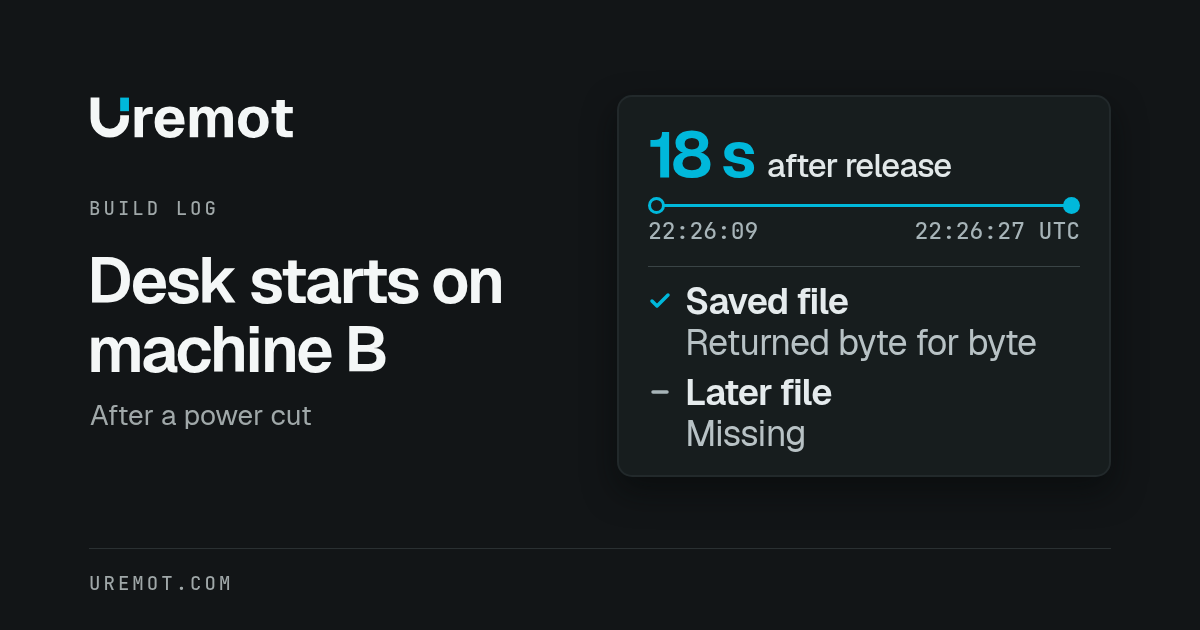
At 22:26:27, Uremot recorded the automatic start of the desk that had been running. It used the saved disk from 22:01. When we checked inside the desk, the file written before that save matched byte for byte. The file we had written at 22:05 was missing. We had verified that it existed on machine A before we cut the power.

The stopped desk stayed stopped. Later, we pressed Start and checked its file against the original. That file matched byte for byte too.
What the desk tells you about the missing work#
The running desk was flagged as possibly missing work. Its record carried the time of the copy it had loaded. The email for that case says the desk moved “to another machine with its copy from 22 November 2026, 22:01 UTC.” It tells you that changes made after that time are outside the copy and can't be recovered from it.
The Console gives you the same cutoff on the desk itself.
Its machine couldn't be reached, so it was moved to another machine with its copy from 22 November 2026, 22:01 UTC. Changes made after then aren't in it.

How a desk gets a copy elsewhere#
Uremot saves the writable disk when a desk stops and every 15 minutes by default while it runs. It divides the disk into 16 MiB chunks, encrypts the changed chunks before upload, and stores them off-site. A save becomes the latest usable copy after Uremot reads the new chunks back. The gap between completed saves is where newer work can be lost.
On each desk's first save on machine B, Uremot issued that desk a new storage key. We checked that both desks saved successfully under their new keys.
The next step is to roll this out to customer desks in the Uremot Cloud beta. If a restore may have missed work, the time on the desk tells you where to start checking.