The hardware under an agent desk, and why we chose it
ECC memory, whole CPU cores and mirrored drives: what each choice protects, what it costs and what we measured.
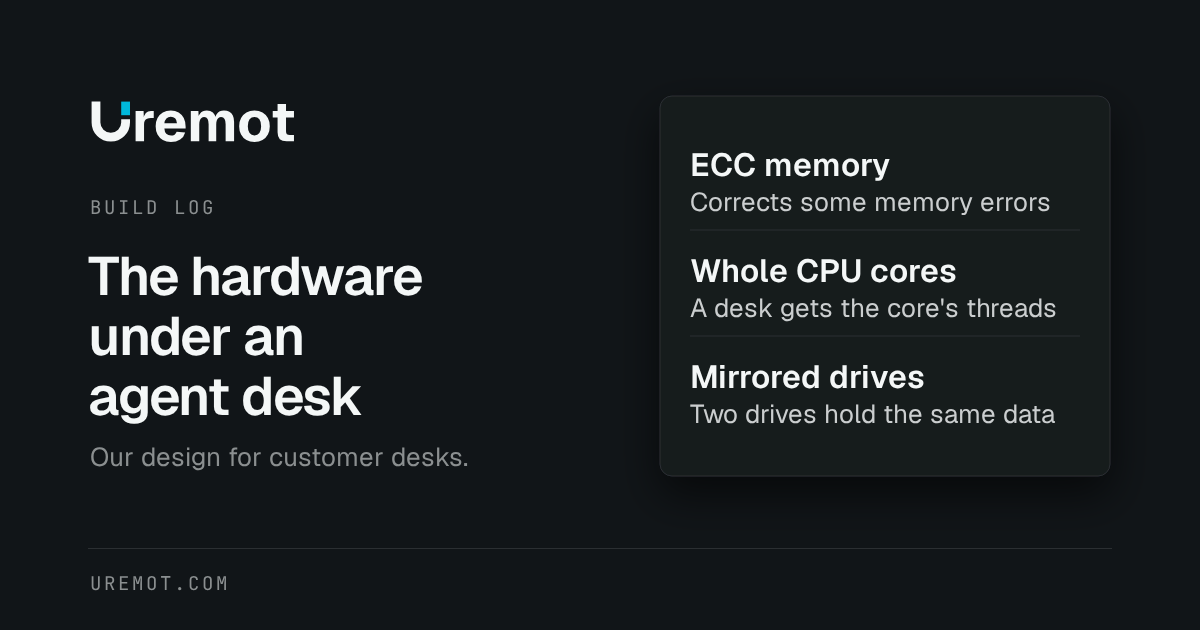
Uremot Cloud runs each agent desk in its own micro-VM. Under that VM are three choices that affect how the desk runs and what happens when hardware fails: error-correcting memory, whole CPU cores and mirrored drives.
ECC memory#
A memory error can crash a machine or leave an application reading damaged data. A 2009 field study of Google's servers found memory errors on about a third of machines per year. The researchers found that persistent hardware faults accounted for much of what they saw. Those figures describe the fleet in the study. DRAM Errors in the Wild
Error-correcting code (ECC) memory stores extra bits so the system can detect errors and correct some of them. The coverage depends on the hardware. A common scheme corrects a single-bit error and detects a double-bit error in the same word. An uncorrectable error can stop the machine. The study describes both outcomes. Field study, introduction and §2
We require working ECC on machines that run customer desks. That narrows the pool of machines we can use. ECC is one layer of memory protection. Some faults and disturbances can still corrupt data.
Whole CPU cores#
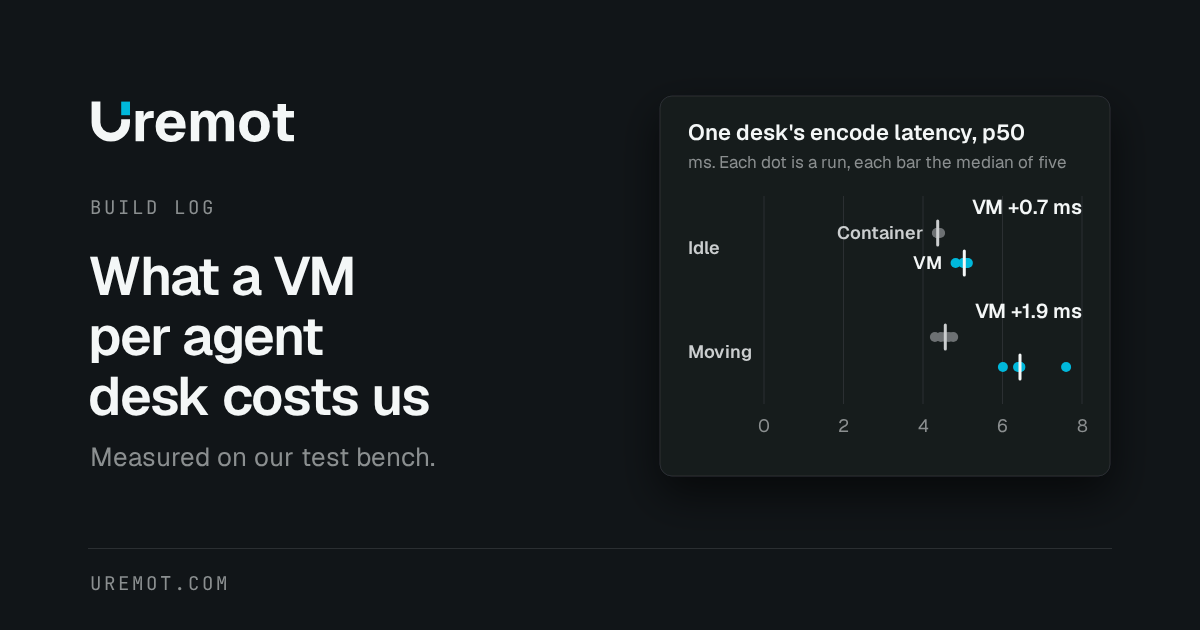
A running desk gets whole CPU cores, including both hardware threads of each assigned core. Another desk doesn't run on those cores while they are assigned. Cores on the same processor can still share a last-level cache. The trade-off is that a busy desk can't borrow an idle neighbour's core. Why every agent desk gets its own cores
On one test machine, at our encode-latency cutoff, whole cores held five idle VM desks or four busy VM desks. With shared cores, the same test held two idle or one busy. The post gives the workload, cutoff and results. Whole cores and shared cores, measured
Mirrored drives#
We use a two-drive mirror for desk storage on the machine. Both drives hold the same data, so the mirror can tolerate one drive failing. Usable capacity is roughly one drive's worth before formatting and reservations.
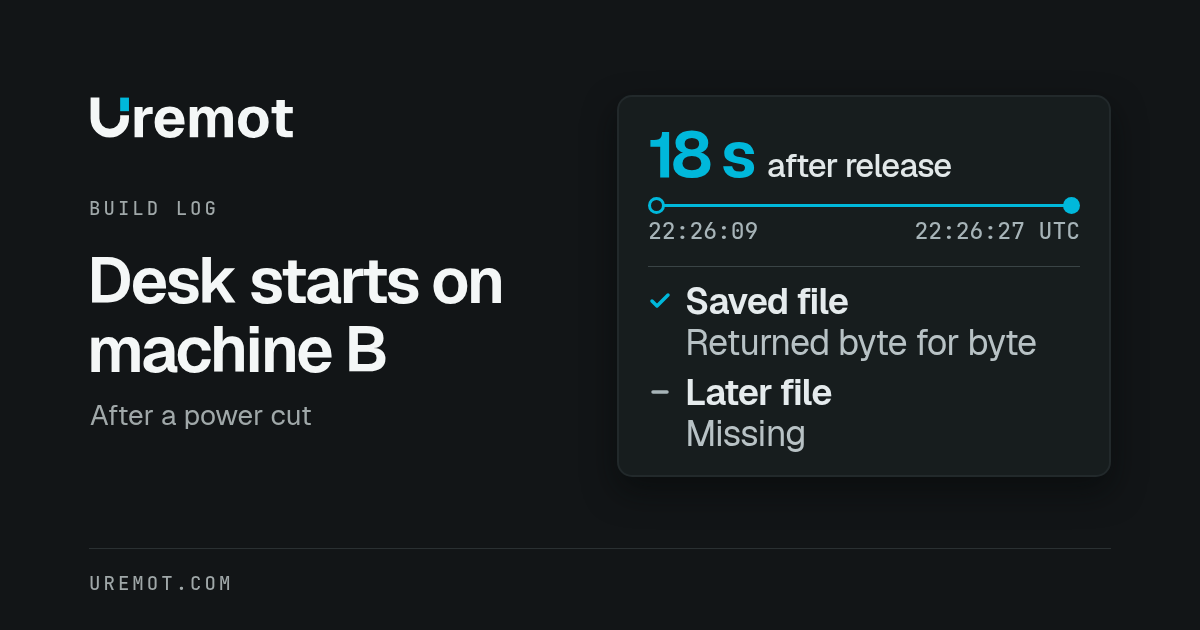
If the whole machine is lost, its mirror goes with it. An off-machine copy is a separate recovery path. In a lab test, we cut power to a machine and brought desks back from their saved copies on another one. A file written after the running desk's last save was missing. The desk showed the time of the copy it used. What comes back when a desk's machine is lost